
ECHT (Queer Film Award)

With the queer film award ECHT , the BIFF, in cooperation with the Association for Sexual Emancipation e.V., honors lesbian, bisexual, gay, trans*, inter, and queer filmmaking.
The prize money of 2,500 euros is sponsored by the Hotel Deutsches Haus, and the winning film is selected by a jury.
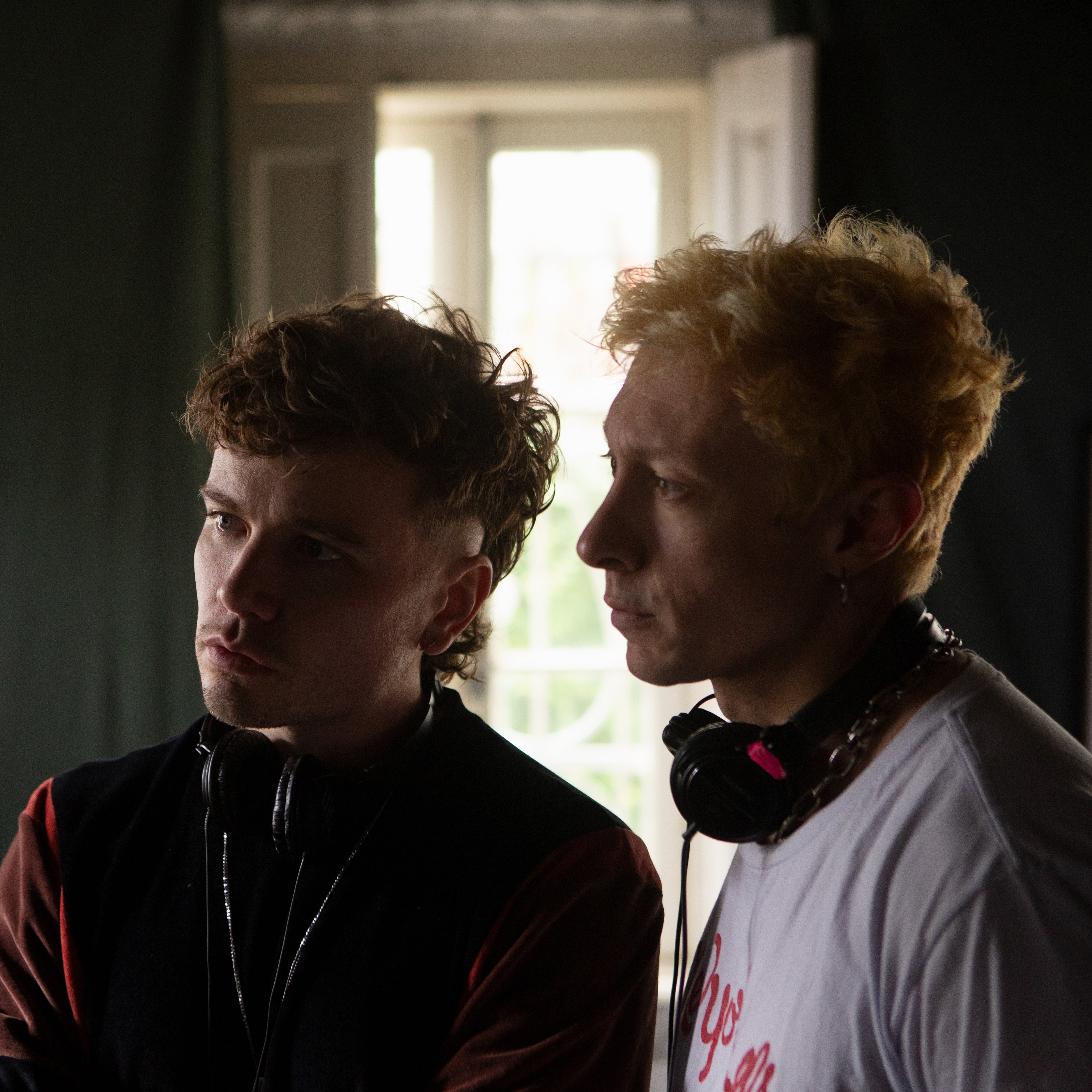
Filipe Matzembacher & Marcio Reolon
Filipe Matzembacher and Marcio Reolon are Brazilian directors and screenwriters. Their features SEASHORE (2015), HARD PAINT (2018) and NIGHT STAGE (2025) all premiered in the Berlinale. HARD PAINT won the Teddy Award for Best Film and the C.I.C.A.E. Jury Award. They live and work in Berlin, where they also teach Film Production and Acting.
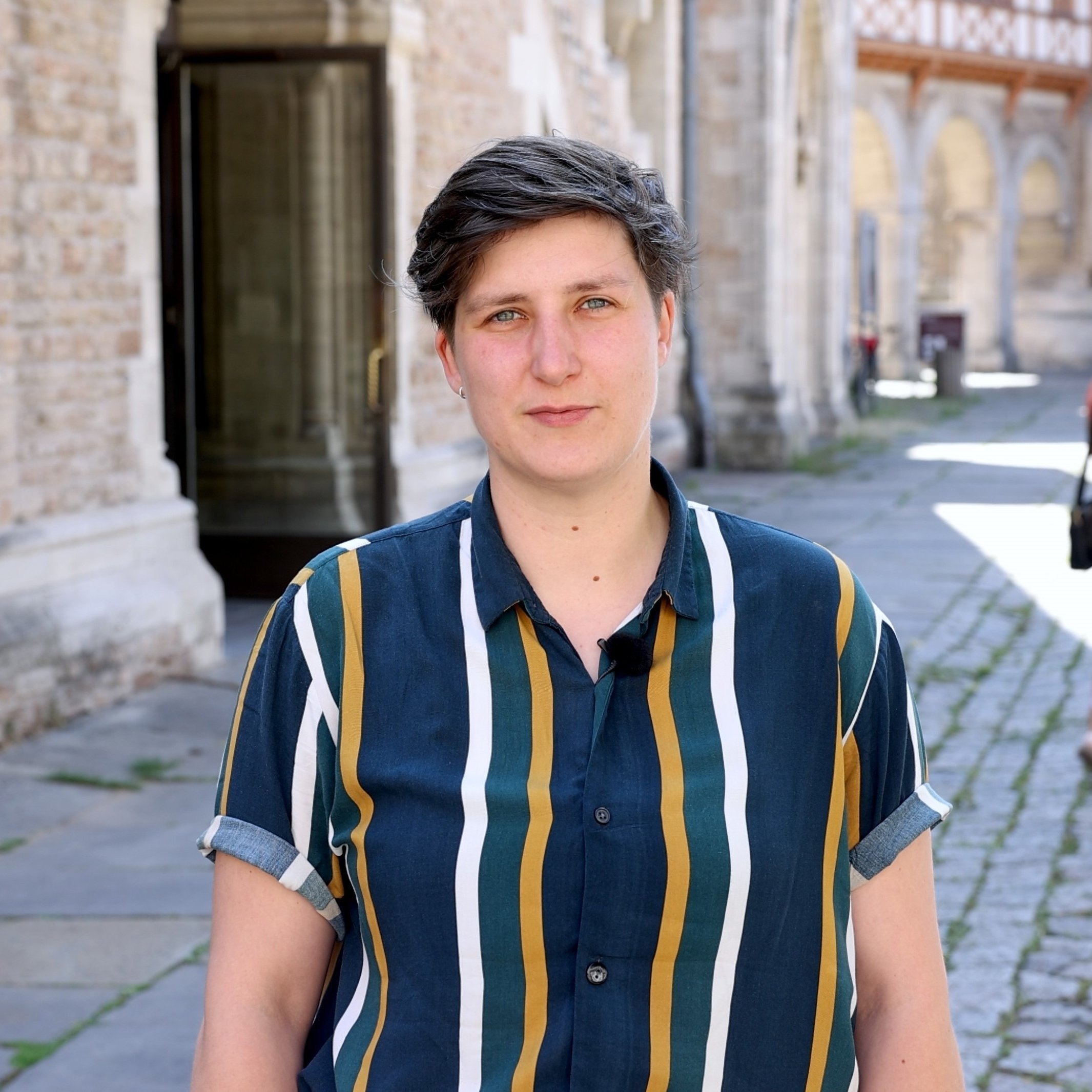
Mareike Stober
Mareike Stober heads the LGBTIQ* Coordination Office for the City of Braunschweig. In this role, she has been advocating for the interests of the queer community in Braunschweig since 2019, with the goal of breaking down barriers and ensuring that queer people become a visible, accepted part of society.
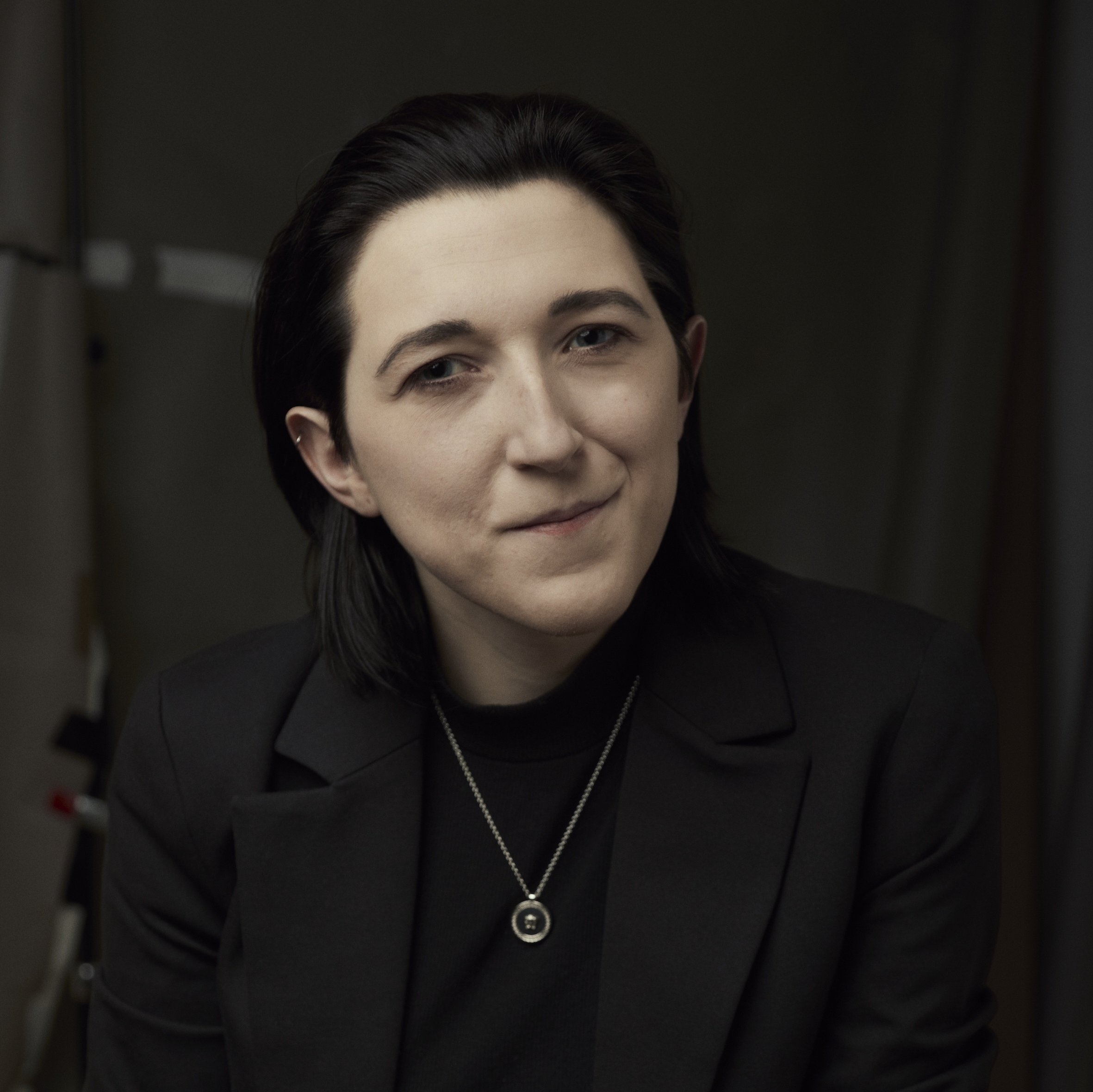
Arabella Wintermayr
Arabella Wintermayr is a film and TV series critic. She writes about cinema, culture, and politics for publications including taz, Freitag, ZEIT Online, Sissy, Jacobin & Surplus. She also works as a TV editor for phoenix. Since 2024, she has been a member of the Fiction nomination committee for the Grimme Prize, and since 2025, she has curated the shortlist for the Televisionale German Series Award.
2025: LOVE LETTERS

Director: Alice Douard, France 2025, 97 min, color, original version with subtitles, trailer
Jury Statement:
This year’s ECHT Film Award for Best Queer Film goes to a work that finds the political in the personal. To a film that offers insight into the lives and love of two people, in all their everydayness and ordinariness, yet never loses sight of the very real difficulties and obstacles that queer relationships in particular face time and again. In her debut film—inspired by her own experiences—the director explores inequality within equality without overdramatizing, but rather with tremendous authenticity, plenty of charm and wit, and above all, remarkable tenderness, without ever slipping into kitsch or superficiality. Excellent lead actresses and perfectly cast supporting roles do the rest, and in the end, this film is also about our social reality today—and not just about France in 2014.
The 2025 ECHT Film Award goes to “15 Proofs of Love” by Alice Douard.

Kadir Özdemir
Kadir Özdemir is an author, theater artist, and political educator. He is the founder of the theater group Migrationserb:innen and the postmig writers collective, as well as the director of the post-migrant literary festival collecting:dreams Festival.

Patrick Heidmann
Patrick Heidmann lives in Berlin, where he works as a freelance journalist, critic, and host. For more than 25 years, he has been writing and speaking about film, television, and streaming for clients such as the FAZ, taz, EPD Film, Queer.de, Spot Media & Film, Rolling Stone, InStyle, and Deutschlandfunk Kultur.

Thea Ehre
Thea Ehre is an Austrian film and theater actress who has appeared in *DAS LICHT* (Tom Tykwer, 2024) and *DIE RÄUBERINNEN* (Isa Schieche, 2023). She has received numerous awards, including the Silver Bear for Best Supporting Actress in *BIS ANS ENDE DER NACHT* (Christoph Hochhäusler, 2022). Thea Ehre is an active advocate for the visibility and representation of trans people in film, theater, and public life.
2024: AWESOME

Jury Statement:
We are awarding the ECHT Queer Film Prize to the film TOLL by Carolina Markowicz.
A topic that is, unfortunately, still relevant (worldwide)—conversion therapy—is told here with courage, visually striking imagery, and surprising lightness. The director skillfully imbues all the characters and relationships with an ambivalence and complexity that make flippant judgments and condemnations impossible, forcing viewers to grapple on a deep level with the hardships, constraints, and the reality of life faced by a single mother and her queer son in a precarious environment. Particularly noteworthy is the director’s bold decision to give the mother’s perspective ample space and emotional resonance. A film that, far removed from simplification and easy answers, touches the viewer deeply and lingers in the mind long after it ends.

Annie Heger
NDR columnist, cabaret artist, human rights activist, literary award winner, musician, and a real character among the East Frisian seagulls: Annie sings and speaks out loudly, dances wildly, knows how to party and make demands, hosts events all over the country—from BIFF and the Federal Ministry for Family Affairs to the cattle drive and the Kale World Championship—and is a welcome guest on talk shows ranging from “Das Rote Sofa” to the NDR Talk Show.

Christos Acrivulis
Christos Acrivulis has curated programs for many film festivals, including the Max Ophüls Prize and the Turin Queer Film Festival. In 2007, he founded the film distribution company missingFILMs. His focus is on films by emerging filmmakers such as *DICKE MÄDCHEN* and *ALASKA*, queer films such as *THE CAKEMAKER*, and the complete filmography of Rosa von Praunheim. Since 2020, missingFILMs has been bringing digitized and restored Italian classics—including works by Fellini and Pasolini—back to theaters. Acrivulis has been directing the KLICK Kino in Berlin for the past five years.

Kerstin Polte
Kerstin Polte is an author, lecturer, and director. Her debut film, *Who Actually Invented Love?*, won the Bavarian Film Award, among other honors. She co-directed the queer series *WIR* and *BECOMING CHARLIE* and has just completed her new film *BLINDGÄNGER*. She lives in Berlin with her two children and two cats. At the heart of her often humorous and hopeful stories are unusual, resilient characters and relationships that shed light on and question our society from perspectives that are often overlooked. For her, diversity both in front of and behind the camera is a key to a deep, emotional understanding of how we live together—especially at a time when divisions are growing deeper.
2023: WHO I AM NOT

Directed by Tünde Skovrán, Romania/Canada 2023, 102 min.
JURY STATEMENT
The documentary WHO I AM NOT, by Tünde Skovrán, left a lasting impression on us. With great sensitivity, the director introduces us to the lives of the two protagonists, Sharon-Rose and Dimakatso, two intersex South Africans. In everyday moments—such as looking for a job or going on dates—the film portrays their experiences in a very impressively and unflinchingly how oppressive the binary gender system is for people . Sharon-Rose and Dimakatso refuse to be oppressed; they are living proof that society is sick, not them. Sharon-Rose competes as a beauty queen, while Dimakatso raises awareness as an activist and meets with medical students, among others. Time and again, they are forced to muster the strengthto find themselves, even though it is their environment that denies them a place—through its ignorance and the fear of letting go of a supposed norm. The question Dimakatso asks her partner— “Where do I belong?” —resonates long after the credits roll and compels the audience to reflect on the rigid concepts of belonging and identity . Ultimately, we were particularly moved by the loving portrayal of the protagonists , which gives them the space they are often denied. "Who I Am Not" is not only emotionally moving but also thought-provoking. The film is a clear indictment of the binary system and reminds us that life exists in all its diversity.
Honorable Mention: ALONG CAME LOVE
The feature film ALONG CAME LOVE, original title Le Temps d’aimer [lə tã d(e)me], receives an award in the category REAL in the category Honorable Mention.
This narrative drama by French director Katell Quillévéré [katɛl kiléveʁe] is worth seeing in many respects. Yes, very much worth seeing, in fact. We on the jury are deeply impressedby the high standards and visual aesthetics of this film. We were also impressed by its historical accuracy.
We’re talking about a story that unfolds over three consecutive decades. The opening credits are also a prelude—a montage of monochrome images that stir our emotions. A striking prologue in which black-and-white ways of thinking suddenly encounter the colorful nuances between joy and anger.
It’s about love—and war. What is love, if not war? If not a war-like struggle with the peace we feel in solitude, and with the frustration we encounter in a relationship.
Madeleine, a waitress and single mother, and François, an intellectual from a wealthy family, meet in the early 1950s. On a picturesque shore in Brittany, not far from the once fiercely contested beaches of Normandy, they fall in love. They tie the knot, but each keeps their serious personal secrets hidden.
But what about the queer connection? Where is it? Where isn’t it? It simmers explosively beneath the surface—and beneath the covers. In a surprising way, bisexual and homosexual desires, in a sense, take on color and form. At the same time, moral conventions bear down on the characters with crushing force—a development the director symbolically foreshadows as she follows the couple through a narrow, dark tunnel between dream and trauma.

Karin Hanczewski
Karin Hanczewski, born in 1981, is a German-Polish actress. In addition to various theater productions, she has been playing a detective on the Dresden-based “Tatort” series since 2016 and has appeared in “Tatortreiniger,” the feature films “Im Sommer wohnt er unten” and “Lotte,” as well as in the satirical miniseries #heuldoch and the screwball drama “Der neue Freund.” For the #ActOut initiative, she was awarded the Honorary Prize of the German Acting Award.

Michaela Dudley
Michaela Dudley (born 1961), a Berlin-based queer feminist with African American roots, is a cabaret artist, film actress, author, journalist, and trained lawyer (J.D., U.S.). In her latest feature film, “Gender War: The End of Patriarchy” (dir. Sobo Swobodnik, Germany 2023), a neo-documentary satire, she plays herself. Her cabaret show “A Die-Hard Vegan Domina Lets Loose” brings “sado-excessive” social criticism to the stage, accompanied by musical interludes. As a certified translator, she creates subtitles—such as for the upcoming feature film “Andrea Gets a Divorce” (dir. Josef Hader, Austria 2024) and writes and edits screenplays. From 2018 to 2023, she also translated film, press, and non-fiction texts on behalf of the Berlinale. As a columnist, she writes about culture and politics for “taz,” “Tagesspiegel,” “Belltower.News,” and the LGBTQ magazine “Siegessäule,” where she also reports on the Teddy Award.

Sophie Ahrens
Sophie Ahrens is a film producer. In 2016, she co-founded the production company Schuldenberg Films with Fabian Altenried and Kristof Gerega; the company is based in Berlin and Bavaria. In her work, she places particular emphasis on visionary, queer-feminist, and diverse narrative and working methods.
2022: SO DAMN EASY GOING

Sweden, Norway 2022, 87 min, color, Director: Christoffer Sandler
Everything is going wrong in 18-year-old Joanna’s life right now: She’s run out of ADHD medication and is desperately trying to get money for more. She’s being bullied at school, and her depressed father can’t bring himself to get off the couch—not even to visit her mother’s grave. To cope with the growing storm in her head, she goes swimming—even without paying the admission fee. There she meets Audrey—and everything changes. The film follows Joanna through her complicated life, offering situational comedy as well as depth, without ever becoming maudlin. This is largely thanks to Niki Hanseblad, the charismatic actress playing Joanna, who radiates a fighting spirit and optimism.
Biography Director: Christoffer Sandler is a Swedish writer, producer, and director. He has previously worked on various “coming-of-age” TV series. His first feature film, *SO DAMN EASY GOING*, was, among other things, the opening film of the Göteborg Film Festival and was nominated for several awards.
JURY STATEMENT
“Lesbian love as a safe haven for a troubled protagonist. How often have we seen this portrayed in this way? In ‘So Damn Easy Going,’ teenager Joanna isn’t just struggling with growing up—she also has to cope with her ADHD. When her depressed father is temporarily unable to pay for her medication and the daily necessities of life, she finds herself in trouble. This is also because she doesn’t want anyone to know about her precarious situation—least of all her love interest, Audrey.
Screenwriters Lina Åström, Jessika Jankert, and Linda-Maria Birbeck, along with co-writer and director Christoffer Sandler, didn’t turn this into an arthouse drama with their wonderful young cast—instead, they created a fresh, mainstream arthouse dramedy. “By honoring this film, we want to send a message in support of casual storytelling about
multifaceted, queer characters who do not define themselves EXCLUSIVELY by their sexual orientation or gender identity.”
Honorable Mention for MY EMPTINESS AND I
“While a multitude of films now tell stories about trans* people, trans* lead actress Raphaëlle Pérez was directly involved in the screenplay for ‘My Emptiness and I,’ thereby helping to shape the narrative of her own story from the very beginning. The result is a film that doesn’t follow a conventional narrative about trans* people, yet simultaneously addresses themes familiar to many who live outside gender norms. Raphi is particularly concerned with the question of how far she wants to—or must—conform her body to the norm in order to, for example, have a fulfilling relationship. Underlying this is always the question of what makes a woman
a woman. We are giving “My Emptiness and I” a special mention because the film follows the main character, Raphi, through a process that does not primarily depict a gender transition, but rather critically reflects on the journey from a seemingly apolitical life to public visibility in society.”

Robin Ivy Osterkamp
Robin Ivy Osterkamp (no pronoun) is a consultant on trans* and non-binary issues at the State Trans* Resource Center of the Queer Network of Lower Saxony, a research assistant at the Institute of Sociology at the University of Hannover, and a volunteer board member of the Federal Trans* Association.

Nadine Wrietz
The Berlin-based actress has been appearing on camera since she was 11. She was a member of the ensemble at the renowned “Theater Strahl” for several years and has appeared in over 100 different film and TV productions over the past 35 years. Her portrayal of the self-sacrificing mother “Betty” in “DIESES BESCHEUERTE HERZ” was particularly well-received by critics and audiences alike. Nadine Wrietz is a member of the German Film Academy and was part of the “Actout” initiative in 2021. She lives with her wife and child in Berlin’s Kreuzberg district.

Kai S. Pieck
Kai S. Pieck is an award-winning director and writer for film, television, streaming, events, and theater. In 2018, he founded the Queer Media Society, an initiative by queer media professionals dedicated to raising the visibility and representation of queer content and people in the media.
Lower Saxony Queer Film Award 2021
In 2021, the “Lower Saxony Queer Film Award” was presented in collaboration with the Queer Network of Lower Saxony, the Association for Sexual Emancipation, and the Lower Saxony Ministry of Social Affairs, Health, and Equality. The prize, worth 5,000 euros, was awarded each year to a short film selected by the audience from the queer short film program.
2021: GIRLSBOYSMIX

Directed by Lara Aerts, Netherlands 2020, 7 min
Why is it so important to be a boy or a girl? Wen Long explains, quite naturally and openly, that he was born an intersex child. The nine-year-old wears both “boys’” and “girls’” clothes and plays with toys associated with both genders. The only problem is that others don’t know what to make of it. People say, “If you’re both a boy and a girl at the same time, you’re basically nothing.” Wen Long isn’t interested in making a decision; they simply want to be Wen Long. This insightful, playful documentary shows just how absurd the imposed binary gender division really is. Clothing, toys, restrooms—everything is strictly separated. Society’s tabooing of intersexuality leads to problems. A typical example is the fact that Wen Long’s teacher considers the topic unsuitable for children, even though it is a completely natural phenomenon that also occurs in the animal kingdom. So why is it considered strange in humans?
Lower Saxony Queer Film Award 2018 and 2019
The “Lower Saxony Queer Film Award” was presented in 2019 and 2018 in cooperation with the Association for Sexual Emancipation (VSE). The prize money of 5,000 euros was funded by the Lower Saxony Ministry of Social Affairs, Health, and Equality as part of the campaign “For Sexual and Gender Diversity* in Lower Saxony.”
2019: AND THEN WE DANCED

Directed by Levin Akin, Georgia, Sweden (2019), 105 min.
Since his early youth, Merab has devoted his life to Georgian dance and trains with his partner Mary in the Tbilisi National Ensemble. Between daily ballet classes and occasional dates with Mary, he has hardly any time for himself—especially when he has to look after his chaotic brother. However, his world is turned upside down when the charismatic Irakli joins the ensemble. Not only does Irakli become Merab’s greatest rival for a spot in the starting lineup, but he also awakens Merab’s sexual desire. Levan Akin unfolds the story against a backdrop of a society marked by homophobia, navigating a tension between harshness and devotion, passion and ruthlessness.
Jury Statement:
“There is no sexuality in Georgian dance!” This is the guiding principle of training in the national ensemble depicted in the film *When We Danced*, in which the preservation of tradition is tied to notions of purity and the renunciation of individual expression.
Merab, a young aspiring dancer, is a student at the Georgian National Ballet Academy in Tbilisi. His greatest dream is to become a professional dancer. When the handsome and charismatic Irakli joins the class, Merab initially sees him as a rival for the coveted permanent spot in an ensemble. But Merab’s world is slowly turned upside down as the rivalry very soon turns into admiration and an ever-growing desire. His dancing transforms into a choreography of unbridled zest for life and a struggle for success and recognition. He begins to rebel against the traditional Georgian values of ballet, as he—as a man—is expected to dance in a certain way, a style with which he finds it increasingly difficult to come to terms.
With a precise and sensitive eye, filmmaker Levan Akin shows us beauties worth admiring and structures that need to be changed. In Levan Gelbakhiani, he has found a lead actor who, through his dancing, wonderfully conveys the visual metaphor for the pain and ecstasy of someone who finally wants to fully live his own truth.
The film asks whether a tradition that provides people with stability and identity can afford to turn its back on opportunities for individuals, queer people, and young people. And whether a film with a gay lead character can be submitted as an international entry in the race for the Oscars is a question currently being asked by people in Tbilisi who, exactly two weeks ago, tried to prevent sold-out movie screenings with violent protests. In times of division and simplistic answers, we would like to honor a film that neither condemns cultural traditions nor rejects individual happiness.
“Als wir tanzten” celebrates love, dance, and life—and thus also the culture and traditions of Georgia—but ultimately also the protagonist’s rebellion and resistance against those very traditions. The jury congratulates Levan Akin’s team on this cinematic achievement; “And Then We Danced” is a worthy winner of the 3rd Queer Film Award of the State of Lower Saxony. Thank you very much!
The 2019 Jury

Edith Ahmann
Executive Director of the Women’s and Girls’ Health Center of the Hannover Region (e.V.), speaker on topics including trans* and intersex issues, body awareness, health, resilience, and self-care

Lucie Veith
Inter* Network Coordinator in Lower Saxony; she also serves as the executive director of the office of the Association of Intersex People of Lower Saxony (Verein Intersexuelle Menschen Landesverband Niedersachsen e.V.) and leads the human rights work of the Federal Association of Intersex People (Bundesverband Intersexuelle Menschen e.V.).

Mirja Janine Sachs
Board member of the Queer Network of Lower Saxony (QNN) responsible for trans* issues in Lower Saxony and leader of the Trans*parenz self-help group in Hanover.

Christopher Kühne
A member of the programming team for the 23rd edition of the Perlen - Queer Film Festival in Hanover. He is involved in soliciting, selecting, and commissioning feature-length and short films, as well as graphic design and layout.

Jan Künemund
Media scholar, film journalist, and curator. Freelance film journalist, writing for Spiegel Online, Freitag, Taz, and Filmdienst, among others. Currently working on a doctoral dissertation on queer cinema. Since 2019, he has served on the selection committee for the Duisburg Film Week and as an advisor to the Berlinale Forum.
2018: NINA

Directed by Olga Chajdas, Poland 2018, 130 min.
Nina and Wojtek are an unlikely couple searching for the right surrogate mother for the child they hope will save their relationship. One day, they meet Magda and seem to have found the ideal candidate. Things get more complicated when Nina suddenly finds herself drawn to Magda. NINA is a story about an unexpected, difficult love and complicated decisions, in which losers and winners stand on the same side and in which the world is not divided into good and evil or straight and gay. This accomplished debut paints a sensitive portrait of a strong but confused woman, trapped in her roles as wife and daughter.
The 2018 Jury
HANS HENGELEIN
Officer responsible for LGBTI* issues, acceptance, and advocacy. Lower Saxony Ministry of Health, Social Affairs, and Equality.
CHRISTOPHER KÜHNE
Perlen Team Hannover; involved in the solicitation, selection, and commissioning of feature-length and short films, graphics, and layout.
JESSICA LACH
State coordinator at QNN for MOSAIK Gesundheit—a project for lesbian, bisexual, and queer women* in Lower Saxony.
STEFAN OLSDAL
The bassist for the alternative rock band Placebo is an advocate for the LGBTQI* community. In every country (including those where being different is a problem), he plays a bass guitar that he has painted in the colors of the rainbow.
MARA OTTERBEIN
State coordinator at TiN | Trans* in Lower Saxony since September 2017.She also volunteers in various trans* contexts.
LUCIE VEITH
Network coordinator for the interests of intersex people in Lower Saxony, inter* and human rights activist, awarded the national prize by the Federal Anti-Discrimination Agency in 2017.
The 2018 Winning Film: NINA
Directed by Olga Chajdas, Poland 2018, 130
The Jury’s Statement:
We were presented with six extraordinary queer films that could not have been more different from one another. Each film had the potential to win an award. Nevertheless, the jury had to make a decision. The award goes to the film “Nina” by Olga Chajdas. In it, she paints a portrait of a strong woman who, at the beginning of the film, is searching for a surrogate mother together with her husband. By chance, the young lesbian Magda enters Nina’s life and turns it upside down. The relationship between Nina and Magda quickly shifts from that of a potential surrogate mother to that of lovers.
The casting choices bring visibility to a relationship between feminine women with a significant age difference, as well as to the turmoil and uncertainty that arise from a late—or even sudden—coming out. Interestingly, later on, Nina doesn’t come out as a lesbian at all, but rather as “Magda-sexual.”
Director Olga Chajdas incorporates several unconventional elements into the film. Notable stylistic devices here include “visual composition,” “camerawork,” and “narrative peculiarities.” Overall, the film has a rather somber and cold atmosphere, breaking the cliché of the “lesbian film,” which is often perceived as romantic and warm.”
The jury congratulates Olga Chajdas’s team on this cinematic achievement; “NINA” is a worthy winner of the 2nd Queer Film Award of the State of Lower Saxony.